If you run a textile or dyeing unit in India, you already know one thing:
Wastewater is not stable.
Some days the load is manageable.
Other days the COD spikes.
Color removal becomes inconsistent.
Sludge generation doubles.
Power bills increase.
And when the Pollution Control Board inspection notice arrives, that's when everyone suddenly starts checking the ETP logbook.
An ETP Plant for Textile Industry is not just a compliance requirement. It is a critical part of plant operations. If it fails, production suffers.
Why Textile Effluent Is So Difficult to Treat
Textile wastewater is not like food processing or domestic sewage. It contains:
The biggest challenge is color and chemical oxygen demand (COD). Even after biological treatment, color often remains. This is why a generic wastewater treatment system rarely works for textile units. A proper Textile Effluent Treatment Plant must be engineered specifically for dye-house discharge.
The Reality Inside Most Textile Units
In many factories, the ETP was installed years ago based on:
But textile production does not remain constant.
Dye combinations change
Batch sizes fluctuate
Water consumption varies
Salt load increases
If the ETP design did not account for variation, performance drops over time. This is where most textile units struggle.
What a Proper ETP Plant for Textile Industry Should Include
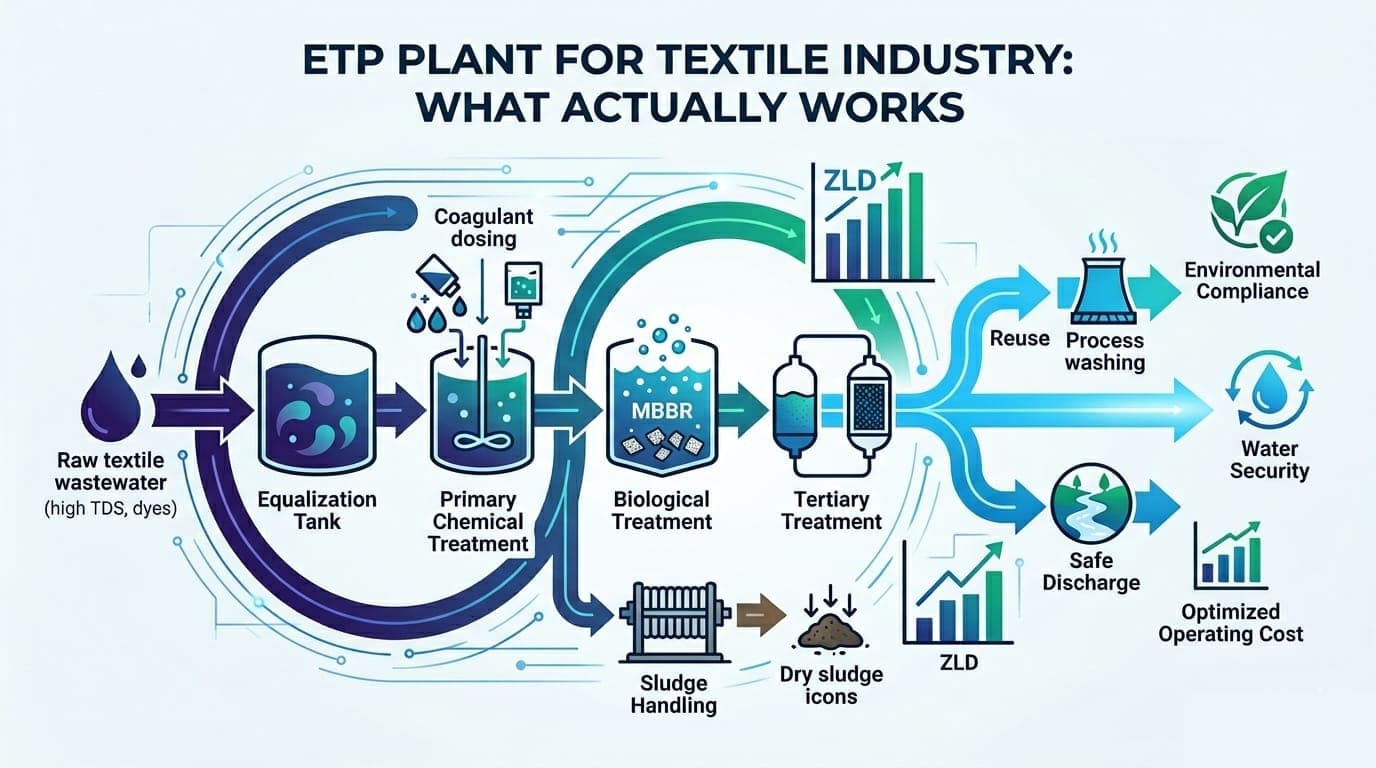
A well-designed system usually consists of the following stages:
Equalization Tank — The Unsung Hero
Textile discharge is irregular. Without proper equalization capacity, load shocks affect downstream treatment. A larger equalization tank stabilizes pH, COD, and flow rate — protecting the biological system.
Primary Chemical Treatment
This stage handles pH correction, coagulation, flocculation, and initial color reduction. Correct chemical dosing is critical. Underdosing leads to poor settling. Overdosing increases sludge volume and chemical cost.
Biological Treatment
Typically includes aeration tank, activated sludge process, MBBR or SBR (depending on design), and secondary clarifier. This stage reduces BOD and COD significantly. However, biological systems alone rarely remove color completely.
Tertiary Treatment — Where Compliance Is Won or Lost
To meet strict discharge norms, tertiary polishing is essential: pressure sand filter, activated carbon filter, advanced oxidation (if required), and RO system for reuse or ZLD requirements.
Sludge Handling System
Textile ETPs generate significant sludge. A proper sludge management setup includes a sludge thickener, filter press, and dry sludge disposal system. Ignoring sludge handling increases long-term operating costs.
Compliance Pressure Is Increasing in India
State Pollution Control Boards are tightening monitoring. In textile clusters across Gujarat, Tamil Nadu, and Rajasthan, inspections are more frequent. In some areas, Zero Liquid Discharge (ZLD) is mandatory.
Non-compliance can result in:
Installing a properly engineered ETP Plant for Dye Industry is no longer optional. It is a business survival requirement.
Common Mistakes Textile Units Make
An ETP that looks affordable at installation can become expensive in maintenance.
Design Factors That Must Be Considered
Before finalizing any Industrial Wastewater Treatment Textile solution, these must be evaluated:
Every textile unit is different. The ETP design must reflect that.
Can Treated Water Be Reused?
Yes.
With proper tertiary treatment and RO integration, treated water can be reused for:
Water reuse reduces freshwater dependency and improves sustainability credentials. Many export buyers now prefer environmentally compliant suppliers.
Cost of ETP Plant for Textile Industry
Cost depends on capacity (KLD), technology selected, ZLD requirement, civil construction scope, and automation level.
Small Units
₹10–15 Lakhs
20–50 KLD capacity
Larger Plants
Significantly Higher
200+ KLD capacity
The real cost should be evaluated over 5–10 years — including chemical usage, power consumption, sludge disposal, and maintenance. Low initial cost does not mean low lifetime cost.
Choosing the Right Textile Effluent Treatment Plant Manufacturer
When selecting a Textile Effluent Treatment Plant Manufacturer, evaluate:
A reliable ETP Plant Supplier India should first analyze your effluent sample before recommending any design. If someone offers a standard design without studying your wastewater, that is a warning sign.
The Direction Textile Wastewater Treatment Is Moving Toward
The industry is gradually moving toward:
Environmental compliance is no longer a formality. It is becoming part of brand credibility.
Final Thought
An ETP Plant for Textile Industry should not be treated as a secondary utility. It is as important as your production line.
A poorly designed system creates ongoing operational stress. A properly engineered system runs quietly in the background, protecting your plant, your compliance status, and your reputation.
If you are planning to install or upgrade your textile effluent treatment system, start with a proper technical assessment — not a quotation comparison. That single decision makes all the difference.